
 Menu
Menu
Valentine’s Day is all about love, sweet surprises, and thoughtful treats—at least for humans. For pets, however, this holiday brings a buffet of potential hazards hidden behind heart-shaped boxes and festive wrappers.
To help you celebrate safely, True Care Veterinary Hospital in Howell, NJ, is sharing essential Valentine pet safety tips, including which foods are toxic to dogs, cats, and other furry family members and should never make it onto their holiday menu.
Chocolate: The Classic Valentine Danger
Nothing says Valentine’s Day like chocolate, but even small amounts can cause serious problems for pets. Chocolate contains theobromine and caffeine, two compounds that lead to chocolate poisoning in pets.
Why Chocolate Is Harmful
Dogs and cats metabolize these compounds much more slowly than humans. This can lead to:
- Vomiting, diarrhea, and restlessness
- Elevated heart rate
- Tremors or seizures in severe cases
Darker chocolate contains higher concentrations of theobromine, making it especially dangerous. If you want to keep your celebration sweet and stress-free, make sure all chocolate boxes, decorative dishes, and gift bags stay closed and out of reach.
Sugar-Free Sweets: Small Ingredient, Big Risk
Sugar-free candies and baked goods often contain xylitol, an artificial sweetener that causes a rapid drop in blood sugar in dogs.
What Makes Xylitol Dangerous
Xylitol can trigger life-threatening hypoglycemia in as little as 10 to 15 minutes. In larger amounts, it may also cause liver damage. Products to watch for include:
- Sugar-free chocolates and candies
- Sugar-free gum
- Baked goods made with sugar substitutes
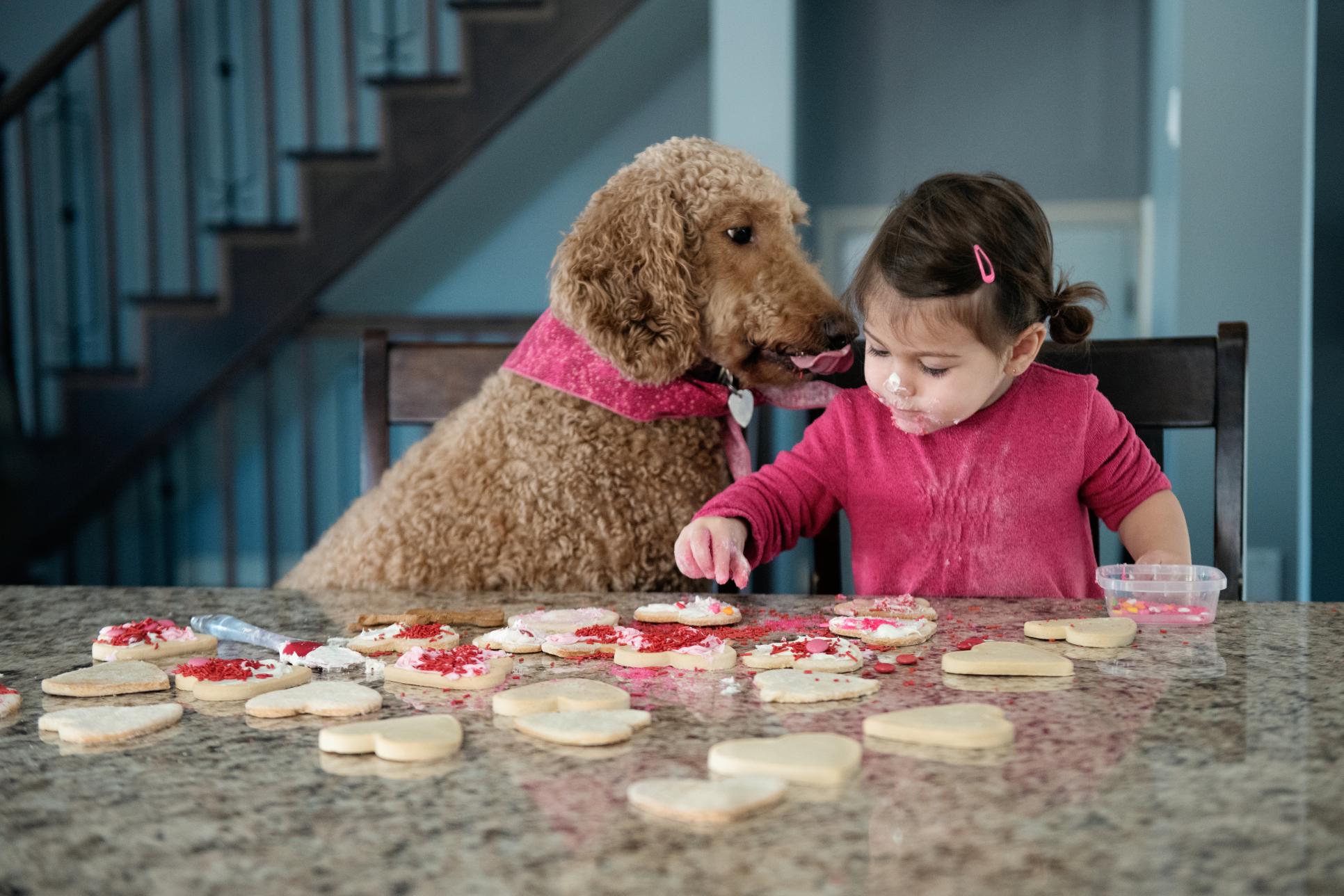
If you’re planning to bake Valentine treats, double-check ingredient labels and keep mixing bowls and countertops clean so curious pets don’t sneak a taste.
Flowers and Bouquets: Beautiful but Potentially Risky
Valentine’s flowers brighten any room, but some popular floral choices are toxic to pets. Before placing that gorgeous bouquet on the table, take a moment to scan for harmful blooms.
Common Toxic Flowers
Even a few petals or leaves from these plants can make your pet sick:
- Lilies (especially dangerous for cats)
- Tulips
- Daffodils
- Baby’s breath
Many bouquets mix safe and unsafe flowers together, so when in doubt, keep arrangements in high or closed-off spaces. Checking the label or asking your florist will help you avoid accidental exposure.
Alcohol and Sweet Drinks: Off Limits To Pets
A romantic dinner might include wine, champagne, or a specialty cocktail. Pets are often attracted to the sweet smell of mixed drinks, but alcohol affects them much more strongly than it does humans.
Signs of Alcohol Exposure
If a pet accidentally laps up a drink, symptoms may include:
- Disorientation or stumbling
- Vomiting
- Difficulty breathing
To keep the evening safe, never leave glasses unattended on coffee tables, and promptly clean up spills.
Pet-Safe Treats to Celebrate Together
While the list of foods toxic to dogs and cats may feel long, there are plenty of safe and festive treats your pet can enjoy. Offering special snacks helps them feel included without putting their health at risk.
Here are a few simple, safe options:
- Pet-safe treats from your local store, especially those made with limited, natural ingredients
- Fresh fruits such as strawberries or apples (avoid grapes and raisins)
- Pet-friendly baked treats free from sugar substitutes and artificial sweeteners
These options let your pet share in the holiday excitement while keeping their celebration worry-free.
Keep Valentine’s Day Sweet and Safe
A little planning goes a long way in preventing holiday mishaps. By keeping chocolate, alcohol, sugar-free sweets, and harmful flowers out of reach, you’ll protect your pet from common Valentine’s hazards and enjoy a peaceful celebration together.
If you have questions, our veterinarians and staff are here to help. Call us at (732) 677-2180 to schedule a wellness visit or get expert advice tailored to your pet’s unique needs.