
 Menu
Menu
They often start small and can be mistaken for an insect bite or mild irritation. But before you know it, that tiny spot turns into a full-blown patch of angry, oozing, foul-smelling skin. Welcome to the world of hot spots, aka acute moist dermatitis in dogs.
These painful sores can appear suddenly—in a matter of hours—and trigger a perpetual cycle of intense itching, hair loss, and infection.
In this blog, our team at True Care Veterinary Hospital provides a helpful primer on acute moist dermatitis in dogs.
Understanding Hot Spots in Dogs
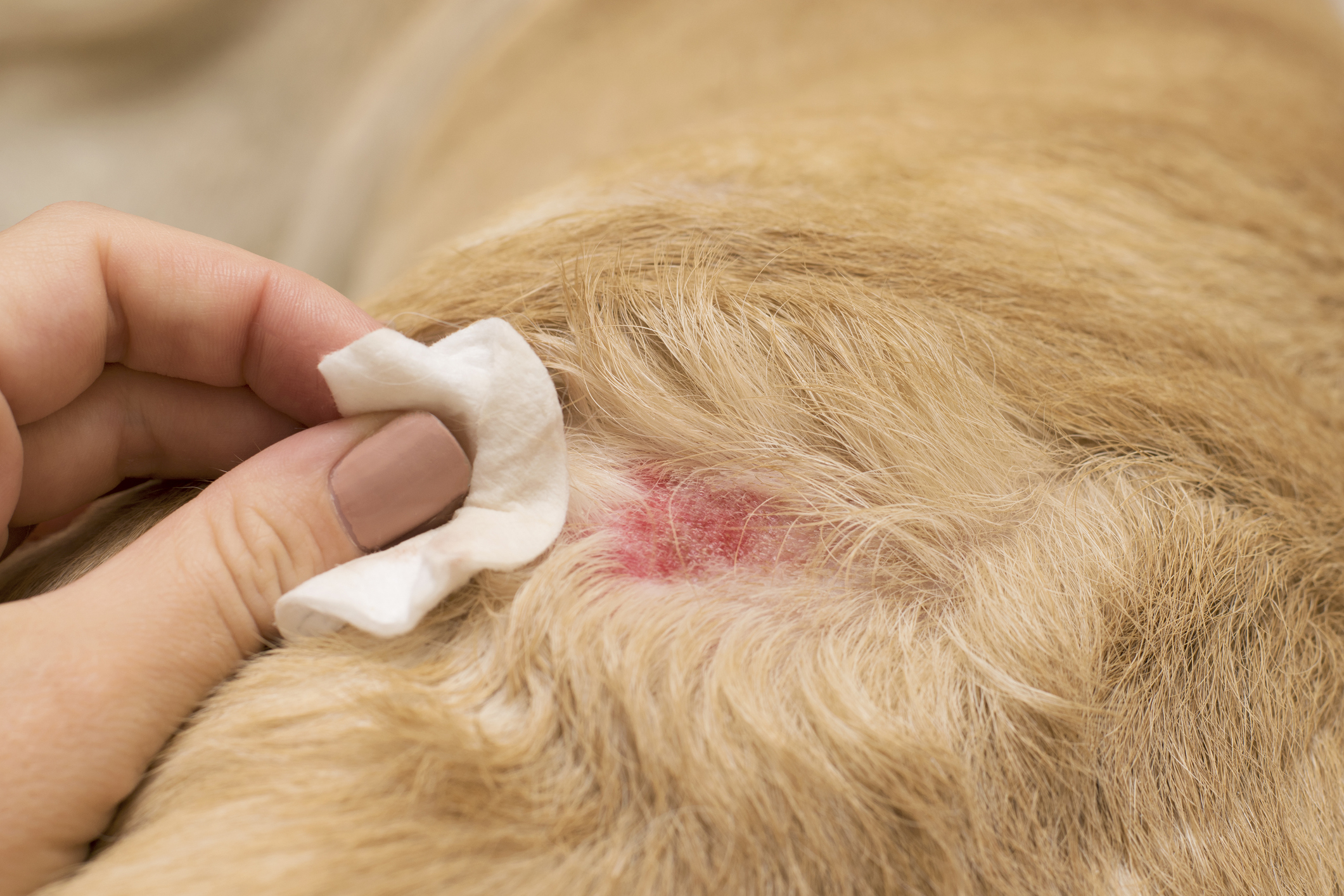
Hot spots, also known as acute moist dermatitis in dogs, are inflamed, infected areas of skin that can develop suddenly and worsen just as fast. A typical red moist lesion on dog skin may look raw, oozy, and painful—and your dog will likely be very focused on it.
What Causes Hot Spots?
Warm, humid weather—like our classic New Jersey summers—creates the perfect environment for bacteria to thrive, especially for our canine friends with long or thick coats.
Common hot spot triggers include:
- Dog itching in summer due to allergies (pollen, grass, mold)
- Flea bites or other parasites
- Moisture trapped in the coat after swimming or bathing
- Skin irritation from grooming or matting
- Minor wounds or insect bites
Signs to Watch For
Hot spots don’t exactly whisper—they tend to shout. Keep an eye out for:
- A rapidly developing red moist lesion on dog skin
- Constant licking, chewing, or scratching in one area
- Hair loss around the affected spot
- A foul odor or discharge
- Signs of discomfort or agitation
Dog Hot Spots Treatment: What to Do
When it comes to dog hot spots treatment, early action is key.
At home, you can:
- Gently trim fur around the area (if your dog tolerates it).
- Keep the spot clean and dry.
- Do your best to distract and discourage your dog from licking the area.
Hot spots that are large, painful, or worsening quickly require veterinary care. Our team can assess the severity and provide targeted treatment to help your dog heal comfortably.
Dog hot spots treatment might include:
- Topical or oral antibiotics
- Anti-inflammatory medications
- Medicated cleansers or sprays
Preventing Future Flare-Ups
Once you’ve dealt with one hot spot, you’ll definitely want to avoid a repeat performance.
Prevention tips include:
- Stay on top of flea and parasite control.
- Dry your dog thoroughly after swimming.
- Manage allergies with your vet’s guidance.
- Keep your dog’s coat clean and well-groomed.
Hot spots may seem to appear out of nowhere, but with quick intervention and a little prevention, you can stop the itch-scratch spiral before it takes over.
Please reach out to us if a dog itching in summer has you concerned or if it’s time for your pet’s checkup.